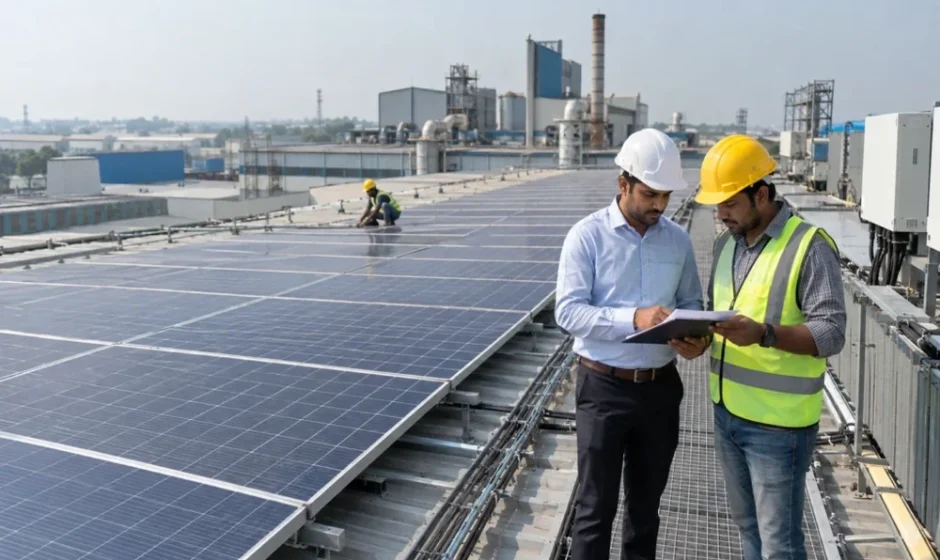

The growth of rooftop and ground-mounted solar installations across India has created a large and increasingly competitive market for engineering, procurement, and construction services, commonly referred to as EPC. A solar EPC company takes responsibility for the complete delivery of a solar installation: the system design, the procurement of panels, inverters, mounting structures, and balance-of-system components, and the construction and commissioning of the completed installation to a performance specification that the client can verify. Understanding what a solar EPC company in India provides, how to evaluate EPC partners, and how a solar installation loan supports the investment decision helps businesses and institutions structure the solar projects effectively.
What does a solar EPC company do?
A solar EPC company in Mumbai or elsewhere in India takes contractual responsibility for the end-to-end delivery of the solar installation:
- Engineering: the design of the solar system, including the energy yield assessment based on the site’s solar irradiance, the shadow analysis that determines the optimal panel placement, the selection of the panel and inverter technology suited to the site conditions and the performance requirement, the structural design of the mounting system for the specific roof or ground structure, and the electrical design of the cabling, protection, and grid connection
- Procurement: the sourcing of solar panels, inverters, mounting structures, cables, switchgear, and all other components to the quality specification and delivery schedule that the project requires. A quality solar EPC company procures from vetted manufacturers with bankable product warranties and the certification that grid connection approvals require
- Construction: the physical installation of the mounting system, the solar panels, the inverter and associated electrical equipment, the cabling between the array and the inverter, and the grid connection. Construction includes the commissioning tests that confirm the system is operating to design specification before handover
- Grid connection and net metering: the coordination with the local distribution company (DISCOM) for the net metering application, the technical inspection of the installation, and the activation of the bi-directional meter that allows the export of excess solar generation to the grid
What distinguishes a quality solar EPC company in India?
The quality of solar EPC company India operations varies significantly, and the selection of an EPC partner for a significant installation requires evaluation across several dimensions:
- Technical capability and engineering depth: the ability to design systems correctly for the specific site conditions, including non-standard roof geometries, shading challenges, and the electrical characteristics of the grid connection point. Engineering mistakes in the design phase are expensive to correct after installation
- Component quality and supply chain: the quality of the panels, inverters, and structural components sourced by the EPC contractor determines the long-term performance and reliability of the installation. EPC contractors who specify components from reputable manufacturers with strong warranty support and proven field performance are more reliable partners than those who compete primarily on component cost
- Installation quality and safety: the physical quality of the mounting system installation, the cable management, the electrical protection design, and the adherence to the electrical safety standards and the CEA regulations that govern grid-connected solar installations in India
- After-sales service and monitoring: the availability of the EPC contractor for warranty support, performance monitoring, and preventive maintenance after the installation is complete. A solar system that is not monitored and maintained will underperform relative to the financial projections that justified the investment
What is a solar installation loan and why is it necessary for EPC projects?
A solar installation loan is a credit facility specifically structured to finance the capital cost of a solar installation, whether residential, commercial, or industrial. For most EPC projects, the capital required for the solar investment is not available from the client’s operational cash flow alone, and a solar installation loan from a bank, NBFC, or specialist solar financier bridges the gap between the capital cost and the client’s available resources.
The financial logic of a solar installation loan for an EPC project is that the monthly EMI on the loan is typically less than the monthly electricity bill saving that the solar installation generates, meaning the investment is net cash-flow positive from the first month of operation. The loan repayment is funded in part by the savings, which means the solar installation effectively pays for itself over the loan tenure.
How should businesses evaluate the solar EPC and financing options together?
The selection of a solar EPC company in Mumbai or elsewhere and the selection of the appropriate solar installation loan are complementary decisions that are best made in conjunction. A solar EPC contractor who understands the financing landscape can provide quotations that are presented in the format that lenders require for loan applications, can confirm the system’s energy generation and bill saving projections with the detail that financiers need to assess the investment’s financial viability, and can help coordinate the installation timeline with the loan disbursement schedule.
__________________________________________________________________